Fermentation Gear: The Cheap Kit That Actually Works
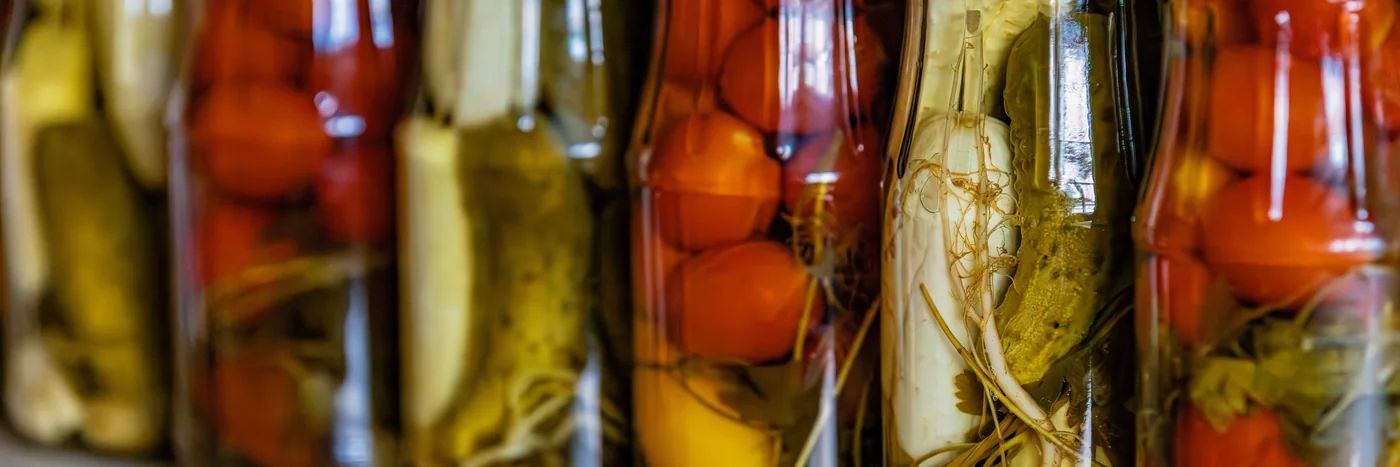
Photograph: Adobe Stock, licensed 27 August 2026. Glass, brine and patience. Most of the kit on this page is cheaper than one month of capsules.
Making your own fermented food is the cheapest possible way to feed your gut live bacteria. A head of cabbage and some salt becomes weeks of sauerkraut for a couple of dollars. And the honest truth is you barely need any equipment. Before you buy a $100 ceramic crock, know that a beginner can start for under $30, and can start for nothing at all.
The minimal kit for beginners
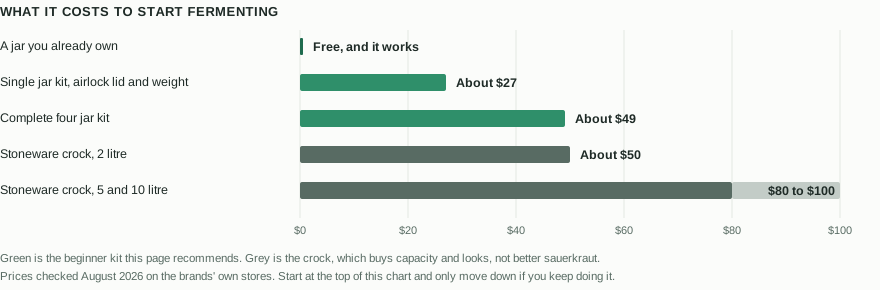
A wide-mouth mason jar fermentation kit, ~$27 for one jar, ~$49 for four
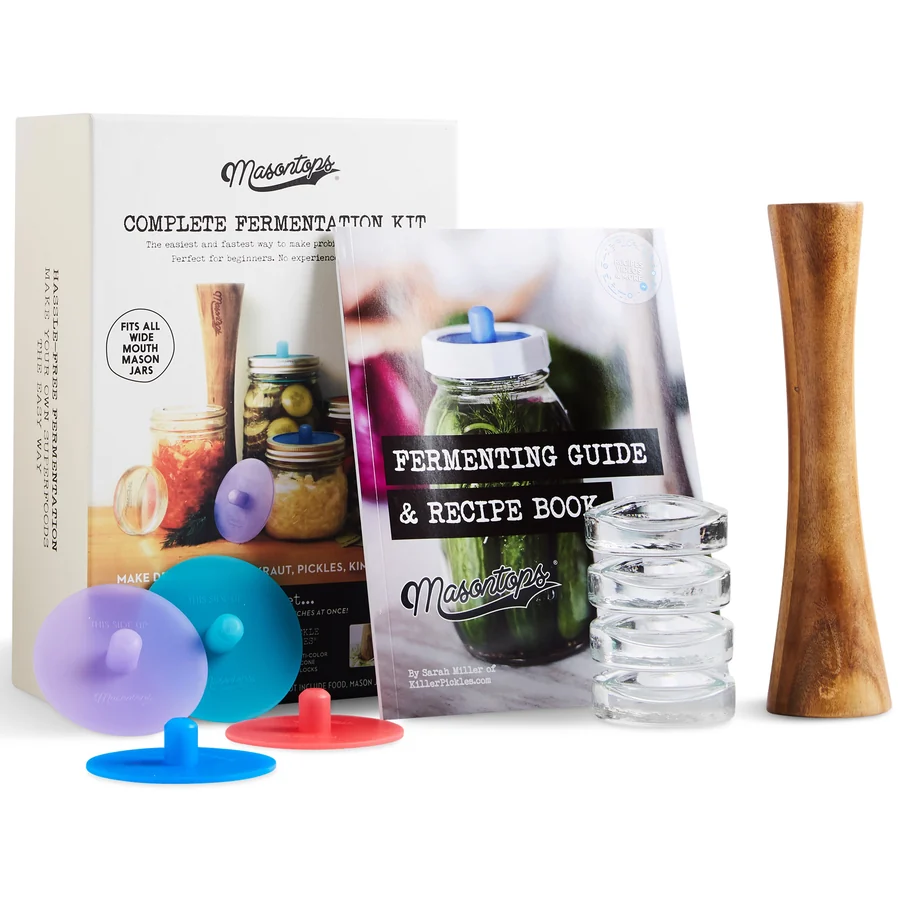
If you already own wide-mouth mason jars, a kit like the Masontops set is the sweet spot: silicone airlock lids that auto-vent the carbon dioxide without you "burping" the jar, glass weights to hold vegetables under the brine, and often a wooden tamper for packing. That is genuinely all you need to make excellent sauerkraut and kimchi.
Be clear on which box you are buying, because the difference is nearly double. Masontops sells a single-jar kit for about $27 on its own store, and the Complete kit, which is the four-lid, four-weight, tamper-and-recipe-book version our link opens, runs about $49 on Amazon. One jar is plenty to find out whether you like this. Buy the four-jar set when you are running batches back to back, not before.
And the cheapest route is still free: pack the cabbage into a plain jar, wedge a smaller jar or a zip bag of brine on top to hold it under, and loosen the lid once a day. That works. The kit buys you convenience and a weight that will not tip, not a better ferment.
Honest note on lid types: the flexible silicone "nipple" airlock lids are popular and work, but the porous silicone can harbor stray yeast over time, so clean them well. Glass weights beat improvised rocks or bags because they are inert and easy to sanitize.
Pros
- Cheap entry into fermentation
- Airlock lids mean no daily burping
- Glass weights keep food safely submerged
- Small batches are perfect for experimenting
Cons
- Need to own or buy wide-mouth jars
- Small capacity per jar
- Silicone lids need thorough cleaning
When a crock is worth it
A water-sealed stoneware crock, ~$50-100
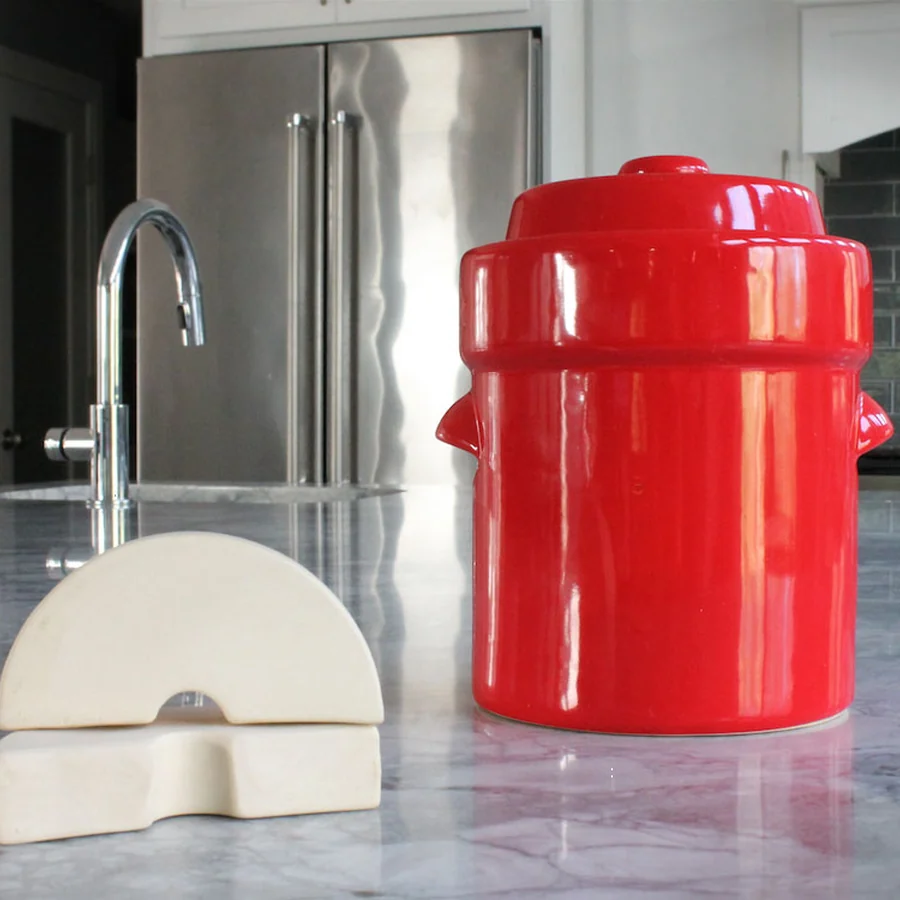
Once you are fermenting regularly and in bigger batches, a water-sealed ceramic crock earns its price. The water moat in the rim lets carbon dioxide bubble out while keeping oxygen from getting in, which is close to ideal for lacto-fermentation, and it comes with heavy stone weights sized to fit. A crock like the Sauerkrock is the classic pick: Humble House sells it direct at about $50 for the 2 litre, $80 for the 5 litre, and $100 for the 10 litre. It has been going in and out of stock on Amazon, so we link the brand's own store.
Be honest with yourself about volume first, though. If you make one jar of kraut a month, a crock is a beautiful countertop object you will rarely use. It is an upgrade for committed fermenters, not a starting purchase.
Pros
- Water seal gives near-ideal anaerobic conditions
- Large capacity for big batches
- Included stone weights, built to last decades
Cons
- Heavy, and a real step up in cost from a jar kit
- Overkill for small or occasional batches
- Takes up real counter or shelf space
The bottom line
Start cheap. A single-jar kit with an airlock lid and a glass weight, about $27, will make excellent sauerkraut and kimchi and prove whether you actually enjoy fermenting. A plain jar and a bit of improvisation will do it for free.
Upgrade to a crock only once you are making big, frequent batches. Most people never need to.
New to why this matters? Fermented foods increased microbiome diversity in a Stanford trial, and homemade versions cost a fraction of store-bought. See fermented foods vs supplements for the evidence.